
A Daughter After Loss
Tiny Beautiful Things: Advice on Love and Life from Dear SugarThis flow follows Cheryl Strayed / Sugar from the death of her mother through the writing, memories, and acts of care that make grief an enduring source of love rather than a problem that can be solved.
increasing Bearing strength in each event
 decreasing
Bearing strength in each eventdecreasingA Mother Dies Young

The Loss That Reorders Life
An Abrupt Absence
Cheryl Strayed / Sugar loses Cheryl Strayed’s mother when she is twenty-two. The death arrives before the daughter has finished becoming an adult and before their shared future can unfold as either of them might have imagined.
The loss does not remain a single event in the past. It alters the meaning of later milestones and leaves Cheryl Strayed / Sugar carrying questions that cannot be answered by recovering the life she had before her mother died.
Grief and Creation
In time, the absence becomes bound to the desire to write a book. The work is not a replacement for Cheryl Strayed’s mother, nor does finishing it bring her back; it gives form to an experience that has otherwise felt impossible to carry.
This relationship between grief and writing becomes one of the central facts of Cheryl Strayed / Sugar’s life. Her later counsel repeatedly returns to the idea that love persists inside loss, even when the lost person cannot be restored.
The Book Inside
Writing Toward Her Mother
A Second Heart
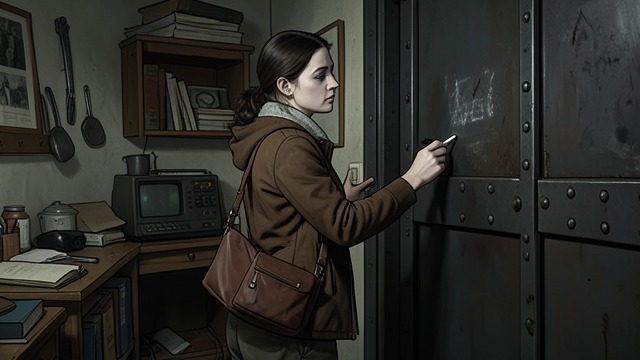
At twenty-eight, Cheryl Strayed / Sugar keeps a Double-sided chalkboard bearing lines by Flannery O’Connor and Eudora Welty. The words help her name the two thoughts joined inside her: how much she misses her mother and how the only way she can bear living without her is to write her own book.
She has grants, publications, journals, and years of reading, but these do not automatically become a finished manuscript. As her thirtieth birthday approaches, she sees that the book will require sustained labor rather than a miraculous arrival.
Work and Humility
Cheryl Strayed / Sugar had expected to accomplish more by a certain age. She must relinquish the fantasy that talent or longing alone will complete the work and accept the possibility that the book may be imperfect or unpublished.
When she finally finishes the last word, she weeps on the floor. The moment marks a change in her relation to the book: the desire that once beat inside her as an unrealized second heart has been carried through effort into a completed work.
The Jar of Stones
Searching for a Presence
A Weight in Her Hands
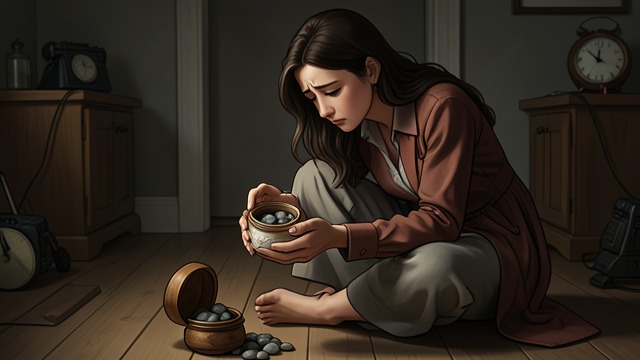
While clearing her mother’s bedroom, Cheryl Strayed / Sugar finds Mother’s jar of stones. The rocks had been collected by her and her siblings as children and given to their mother, who called them worry stones because they felt soothing in the palm.
Holding the jar brings a fleeting sense of holding Cheryl Strayed’s mother herself. Cheryl Strayed / Sugar empties the stones onto the floor and touches them as if they might reveal a way to keep her mother present.
No Code to Crack
She asks where the stones belong and what she owes to memory, reason, and faith. The questions do not yield a combination that can restore what has been lost; the stones cannot make the death acceptable or undo it.
Years later, another bereaved woman tells her that it will never be okay that their mothers are dead. Cheryl Strayed / Sugar recognizes that people can be happy and still live with this unaltered truth, with grief shaping their adult lives and their joys.
A Place for Her Mother

Love Without a Solution
Grief at the Milestones
Cheryl Strayed / Sugar understands the continuing absence through events that would ordinarily gather family around a person: graduations, weddings, the publication of a first book, and the births of children. Cheryl Strayed’s mother is not there for any of them.
This absence does not cancel happiness. Instead, each good experience arrives through the lens of grief, carrying the knowledge of the person who cannot witness it alongside the person who can.
Bearing Witness
Cheryl Strayed / Sugar tells a grieving man that compassion is not the power to solve another person’s loss. It is the willingness to acknowledge what remains unbearably true and to keep offering love.
Her advice to others grows out of the way she has learned to live with her own loss. She does not declare the grief finished; she makes a place for it, allowing a continuing bond with her mother to coexist with a full life.
The Dress in the Box
A Small Object Across Time
A Purchase for Someday
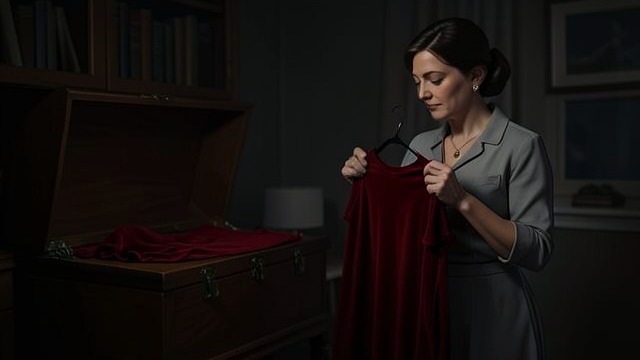
At eighteen, Cheryl Strayed / Sugar sees a red velvet toddler dress at a yard sale while riding with her mother. She resists wanting it because she has little money and does not imagine herself becoming a mother; Cheryl Strayed’s mother buys it and suggests putting it away for someday.
The dress remains inside a cedar chest through Cheryl Strayed / Sugar’s twenties and thirties. Its future significance is hidden even from the young woman who first chose to keep it.
The Meaning Arrives Later
After Cheryl Strayed / Sugar has a daughter, she finds the dress again and sees it on the child during her second Christmas. Cheryl Strayed’s mother bought a dress for a granddaughter she would never know, and the simple fact holds grief and tenderness together.
The dress cannot give the grandmother the years she lost or make the separation less real. It does reveal how love can travel beyond its giver through an object, a memory, and a life the giver never got to see.
When Cheryl Strayed / Sugar is twenty-two
In the years before age thirty-five
Several months after her mother’s death
More than twenty years after her mother’s death
From the summer Cheryl Strayed / Sugar is eighteen to her daughter’s second Christmas
